In the realm of Islamic art, the written word is not merely a means of communication; it is the highest form of visual expression. While Western art historically focused on the depiction of the human figure, Islamic tradition channeled its creative energy into Islamic Calligraphy, transforming letters into “visual music.”
Sacred Origins: The Word as Art
The prominence of calligraphy stems from the belief that the Quran is the divine word of God. To write it is an act of devotion. Because of aniconism (the avoidance of figural imagery in religious contexts), artists poured their genius into geometry and script.
This art form creates a bridge between the spiritual and the material world. A calligraphic panel is not just meant to be read; it is meant to be contemplated, much like a mandala in Eastern traditions.
Styles and Scripts: From Geometry to Flow
Islamic calligraphy is not a monolith; it evolved into distinct styles over centuries, each with its own rules and aesthetic purposes:
- Kufic: The oldest script. Angular, rigid, and geometric. It was often used in early Quran manuscripts and architectural decoration (brickwork).
- Thuluth: Defined by curved lines and complex proportions. It is the elegant script often seen adorning the domes of mosques and monuments like the Taj Mahal.
- Nastal’iq: Developed in Persia (Iran), this fluid, hanging script is often used for poetry and is renowned for its beauty and lyrical flow.
The Tools of the Master: The Qalam
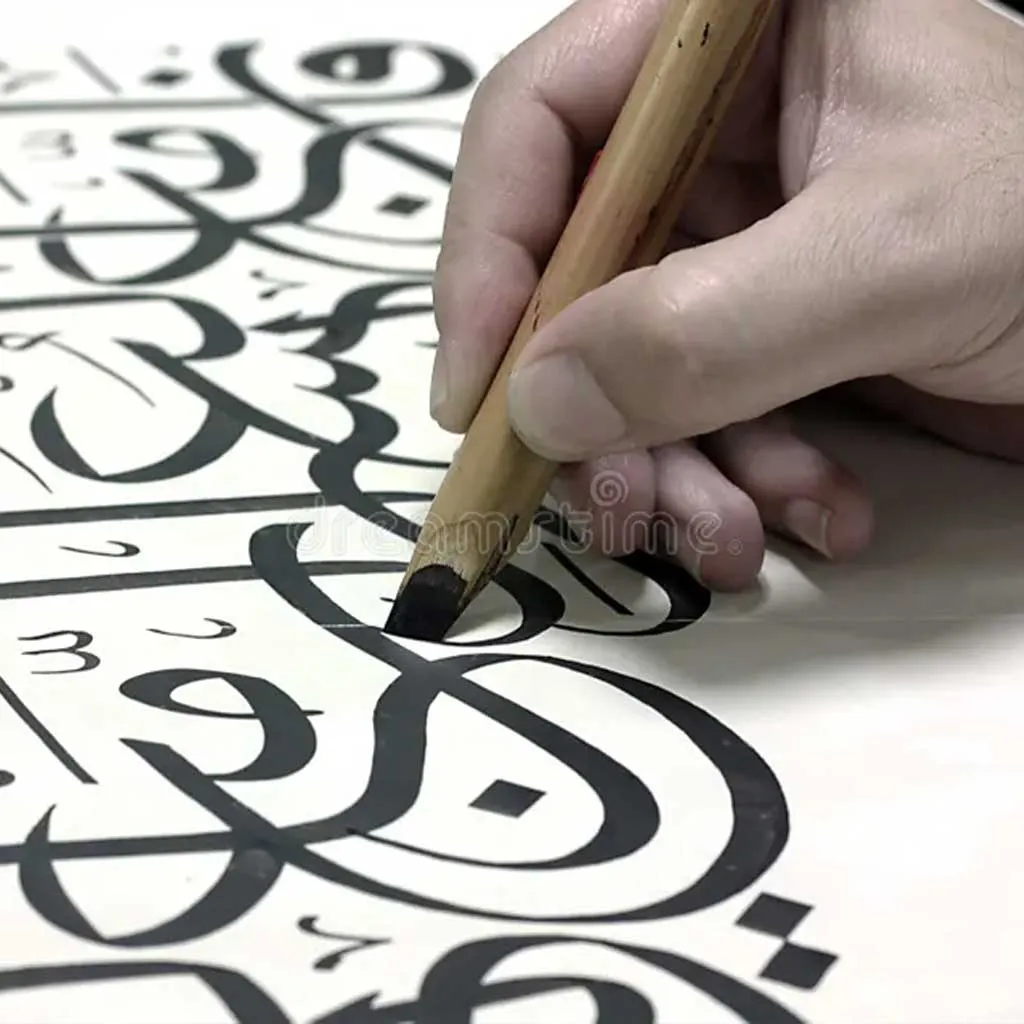
The image associated with this collection features the traditional tool of the calligrapher: the Qalam. This dried reed pen is cut at a specific angle to produce the thick and thin strokes characteristic of the script.
Mastery of the Qalam requires years of discipline. The ink used is often handmade from soot and gum arabic, and the paper is treated (sized) to allow the pen to glide effortlessly. This connection between the hand, the pen, and the breath creates a rhythmic harmony visible in the final artwork.
Modern Resonance
Today, Islamic calligraphy has transcended its religious roots to become a major element in contemporary abstract art (Hurufiyya movement). Its emphasis on balance, rhythm, and the interplay of positive and negative space speaks a universal language of beauty that resonates with art collectors worldwide.