
East Asian art, particularly the traditions of China and Japan, offers a distinct perspective on reality—one that prioritizes the essence (Qi) over the physical form. Unlike the monumental solidity often found in Western art history, the aesthetic of East Asia is defined by fluidity, harmony with nature, and the profound eloquence of empty space.
Central to understanding East Asian art is the concept of negative space. In Japanese, this is known as “Ma” (間). It teaches us that the empty space on the canvas is just as important as the painted subject. It is not merely “background”; it represents the vastness of the universe, the mist on a mountain, or the silence before a sound.
This philosophical approach stems from Taoist and Zen Buddhist influences, where the goal of the artist is not to copy nature, but to capture its spirit and rhythm.
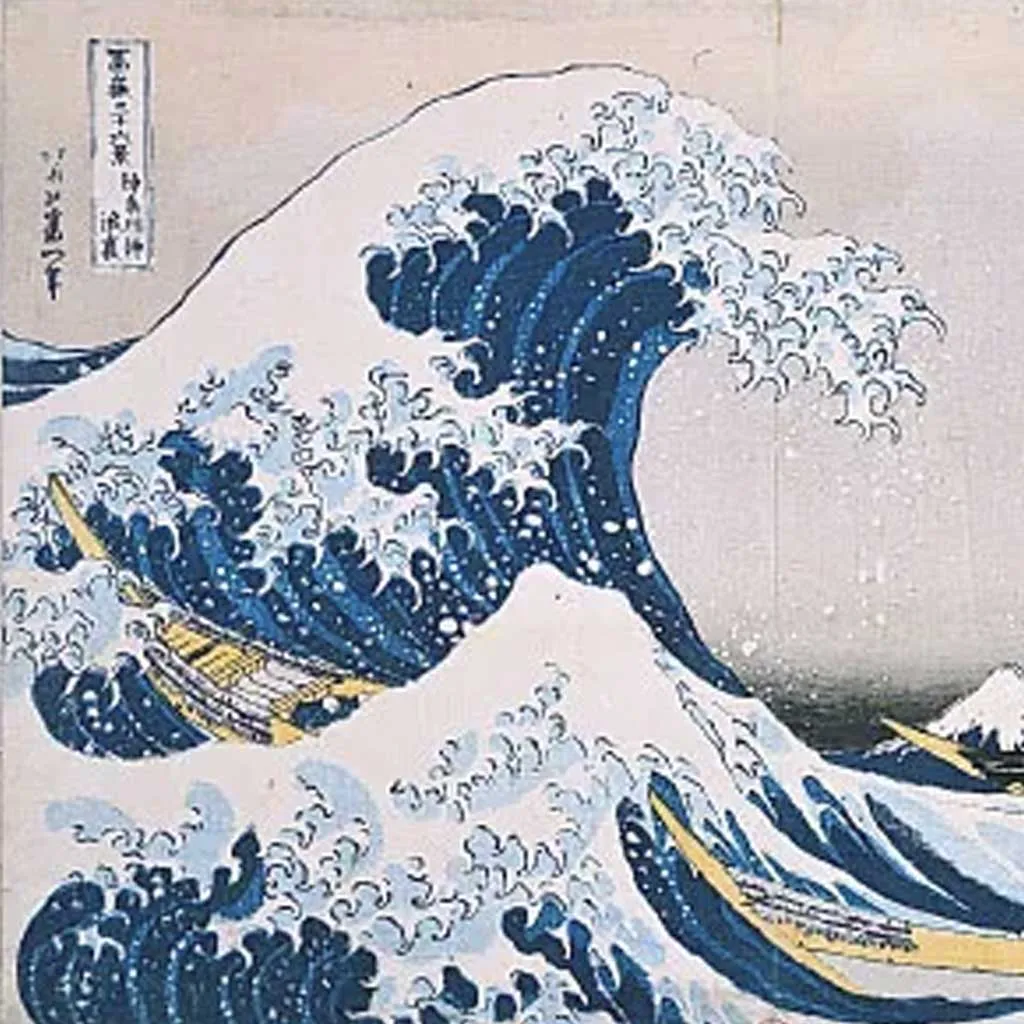
The iconic image of The Great Wave off Kanagawa by Hokusai, which graces this collection, belongs to the genre of Ukiyo-e (Japanese woodblock prints). Flourishing during the Edo period, this art form democratized art, making it accessible to the merchant class.
Ukiyo-e prints are celebrated for:
While woodblock prints captured the vibrant life of the city, ink wash painting (Sumi-e in Japan, Shuǐmòhuà in China) remained the pursuit of the scholar-gentleman. Using only black ink and water, artists created entire worlds.
This medium allows for no corrections. Once the brush touches the absorbent rice paper, the mark is permanent. This demands a state of mental clarity and confidence from the artist, making the act of painting a spiritual discipline in itself.
The aesthetic principles of East Asian art—simplicity, asymmetry, and reverence for nature—heavily influenced the Impressionists in Europe (Japonisme) and continue to shape modern minimalism and design. Collecting East Asian art is an invitation to bring tranquility and mindfulness into one’s living space.